
Lamb biryani combines the richness of lamb shoulder with fragrant rice and a thick yogurt-and-onion masala. The lamb is cooked until tender before layering, so the rice does not overcook while waiting for the meat. This version uses boneless shoulder; lean leg pieces and bone-in cuts will behave differently.
Jump to recipe · Rice troubleshooting · Common questions
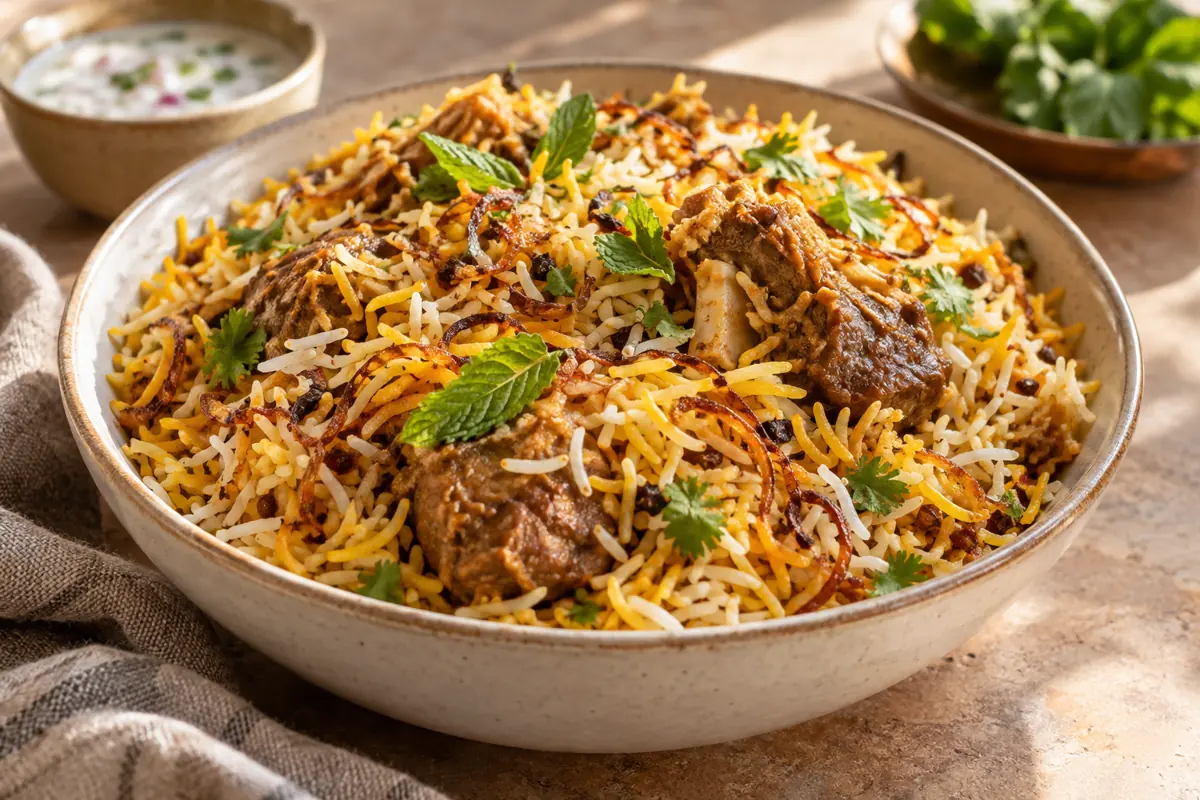
How this lamb biryani method works
The rice and masala are prepared separately, then finished together in a tightly covered pot. Keep the masala moist enough to create steam, but reduce any thin, watery liquid before layering. The final steam should finish the rice gently rather than boil it in sauce.
Lamb shoulder contains connective tissue that benefits from gentle braising. Do not substitute minced lamb using the same timing. Trim hard fat first, then skim excess rendered fat before adding rice.
Lamb Biryani recipe
Serves: 4–6 · Preparation: about 30 minutes · Cooking: about 110 minutes · Refrigerated marinating: 60 minutes · Rest after cooking: 10 minutes. Timings are estimates; follow the doneness checks.
Equipment: a heavy 4–5 litre pot with a tight lid, a large saucepan, colander, measuring spoons and a sharp knife.
Ingredients
- 800 g boneless lamb shoulder, cut into 3–4 cm pieces
- 400 g basmati rice
- 200 g plain unsweetened yogurt
- 2 medium onions (about 300 g), thinly sliced
- 2 medium tomatoes (about 250 g), chopped
- 3 tbsp neutral oil
- 1 tbsp ginger-garlic paste
- 1 tsp ground cumin
- 1 tsp ground coriander
- ½ tsp turmeric
- ½–1 tsp mild chili powder, to taste
- 1 tsp garam masala
- 4 green cardamom pods
- 4 cloves
- 1 small cinnamon stick
- 1 bay leaf
- 30 g fresh mint and coriander, roughly chopped
- 1 tbsp lemon juice
- 1 tbsp ghee or additional oil
- A pinch of saffron soaked in 3 tbsp warm water (optional)
- 2 tsp fine salt, divided, plus salt for the rice water to taste
- 2 litres water for boiling the rice, drained after cooking
- 300 ml hot water, plus more as needed for braising
How to make lamb biryani
- Trim large pieces of hard external fat from the lamb, leaving some marbling. Combine with yogurt, ginger-garlic paste, ground spices and 1 tsp salt. Cover and refrigerate for 1 hour.
- Heat the oil in a heavy pot. Cook the onions for 15–20 minutes, stirring, until golden. Reserve one-third. Add whole spices, stir briefly, then add the marinated lamb. Cook for 8–10 minutes, turning the pieces. Add tomatoes and cook for another 5 minutes.
- Add 300 ml hot water, cover and simmer gently for about 60–90 minutes until fork-tender, checking and adding hot water in small amounts as needed. Spoon off excess surface fat if desired. Uncover and reduce until the masala coats the meat, with no pool of thin liquid underneath.
- While the masala cooks, rinse the rice until the water runs mostly clear, then soak in fresh water for 30 minutes. Drain. Bring 2 litres water to a rolling boil in a separate large saucepan and season with salt. Add the rice and boil for about 4–6 minutes, checking early: the grain should bend but still have a firm, slightly chalky centre. Drain immediately; it will finish cooking in the sealed pot.
- Taste the masala and adjust with the remaining 1 tsp salt only as needed. Turn the heat to its lowest setting. Spread the drained rice over the masala without stirring. Scatter the reserved onions, herbs, lemon juice and ghee over the rice. Add the saffron water if using. Cover tightly with a well-fitting lid.
- Steam on the lowest heat for 15–20 minutes. Use a heavy pot and, if your hob runs hot, a heat diffuser suitable for that hob. Check that the rice is tender; if still firm, sprinkle over 2 tbsp hot water, cover and cook for another 5 minutes. Turn off the heat and rest, covered, for 10 minutes. Lift and fold gently from the edge rather than stirring vigorously. Remove visible whole spices when serving.
Ingredient notes for shopping in Riyadh
Choose plain basmati rather than a ready-seasoned rice mix, and plain unsweetened yogurt rather than flavored yogurt. Check package labels for ingredients and allergens. If using a commercial biryani spice blend, its salt and chili levels may differ substantially from the measured spices here; do not add a full packet on top of them.
Ask the butcher to confirm the meat species and cut. A pack labeled mutton is not enough to establish whether it contains goat or sheep. Buy evenly sized pieces so their cooking time is more consistent.
Fixing common biryani problems
- Mushy rice: shorten the initial boil next time and drain immediately. Check that the masala is not watery before layering. Once grains have broken down, more cooking cannot restore them.
- Rice still hard: sprinkle over 2 tbsp hot water, reseal and steam briefly. Add water sparingly rather than flooding the pot.
- Burnt base: lower the heat and use a heavier pot or suitable diffuser next time. Lift unburnt rice out without scraping the scorched bottom.
- Uneven seasoning: season the rice water as well as the masala. Taste the cooked masala before covering it with rice.
Serving and storage
Serve while hot with cucumber yogurt, sliced onions and lemon wedges. Plain yogurt is a simple accompaniment when the biryani is already spicy. Milk is present in the yogurt and ghee; paneer also contains milk, and the egg version contains eggs.
Cool leftover biryani promptly in small, shallow portions, ideally within one hour. Refrigerate and use within 24 hours. Reheat only once until steaming hot throughout. See the Food Standards Agency’s rice advice.
Common questions
Can I replace lamb with goat?
Use the separate goat biryani recipe for its braising guidance. Goat is often leaner and can take longer; swapping the meat without adjusting the cooking stage can leave it tough.
Why is the rice not fully cooked before layering?
It continues absorbing steam during the covered finish. Fully boiling it beforehand makes it more likely to become soft and break.
Can I double the quantities?
A larger batch changes pot depth, evaporation and heating. Use suitably sized equipment and check doneness; do not assume doubling the ingredients means doubling every cooking time.
More biryani recipes and Riyadh food stories
- Chicken Biryani recipe
- Paneer Biryani recipe
- Goat Biryani recipe
- Egg Biryani recipe
- Biryani guide: choosing rice, meat and method
- Our dum biryani food story at The Lunchbox in Riyadh
Recipe note: this is an editorial home-cooking recipe, not a restaurant’s proprietary recipe. Riyadh FoodBook has not documented a kitchen test of this version. Image provenance is stated in the caption.